After the abbreviated 28-minute Flight 2 and a bit of detective work on the oil temperature wiring, Flight 3 felt like a different airplane — or at least a different experience. Early morning, calm winds, the west side of the field, and a solid two-hour session in the air. It went well enough that I’ve been smiling about it all day. I want to share the data and some of the moments that stood out, and I’m genuinely curious to hear from anyone who’s been down this road with an RV-10 or a similar build.
Getting the West Side — Again
For Flight 2, Manassas Approach had me confined to the east side of the field at only 1,400 feet MSL, which made for a cramped pattern and more stress than I wanted on a second experimental flight. This time, I coordinated early and came out just after 6:30 AM, and the controllers were fantastic. They gave me the west side at 1,800 feet MSL and — when traffic allowed — let me run the full length of the north-south pattern. When arrivals or departures needed the airspace, they’d keep me north of the railroad tracks or south of them as needed. It was a smooth, professional collaboration and made the whole flight feel much more manageable.
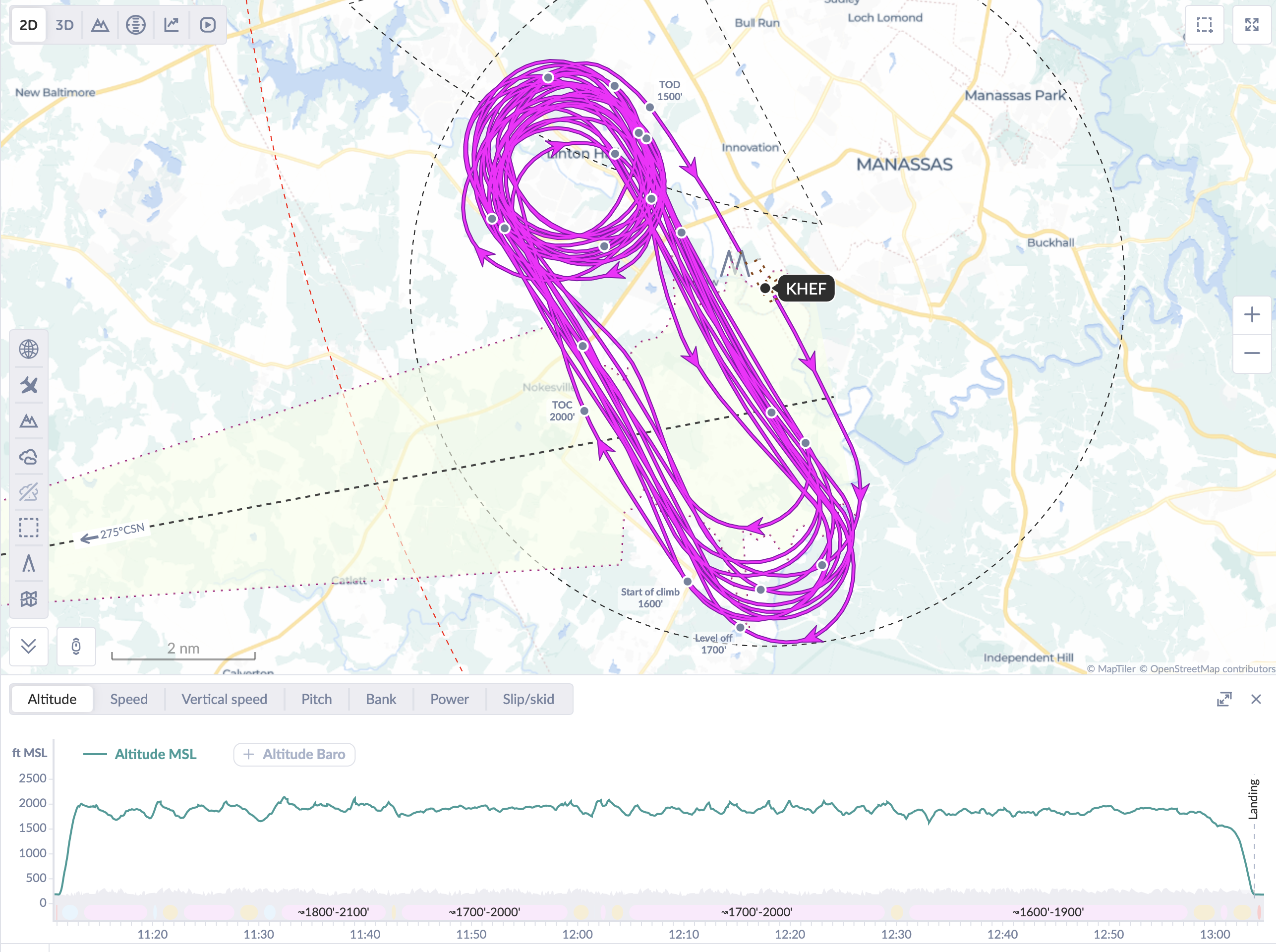
All told, we flew 20.5 gallons out of the left tank, then switched to the right and burned another ~20.5 gallons there — roughly 41 gallons total confirmed by both the fuel totalizer and the fuel truck after landing. The fuel float gauges are a different story (more on that below), but the totalizer was spot-on.
CHTs: Trending in the Right Direction
The cylinder head temperatures were the thing I was most anxious about going in. Flight 1 had a spike past 450°F; Flight 2 saw all six cylinders over the red line briefly. So I was watching the CHT traces like a hawk on departure.
Good news: after the initial climb, everything settled down, and the cruise numbers were genuinely encouraging. Cylinders 3 and 4 spent most of the flight below 350°F — which felt almost cool by comparison to the first two flights. Cylinders 1, 2, 5, and 6 held in the 380–390°F range at 89–93% power. The peak for the entire flight just barely touched 435°F, and only briefly at the start of the climb.
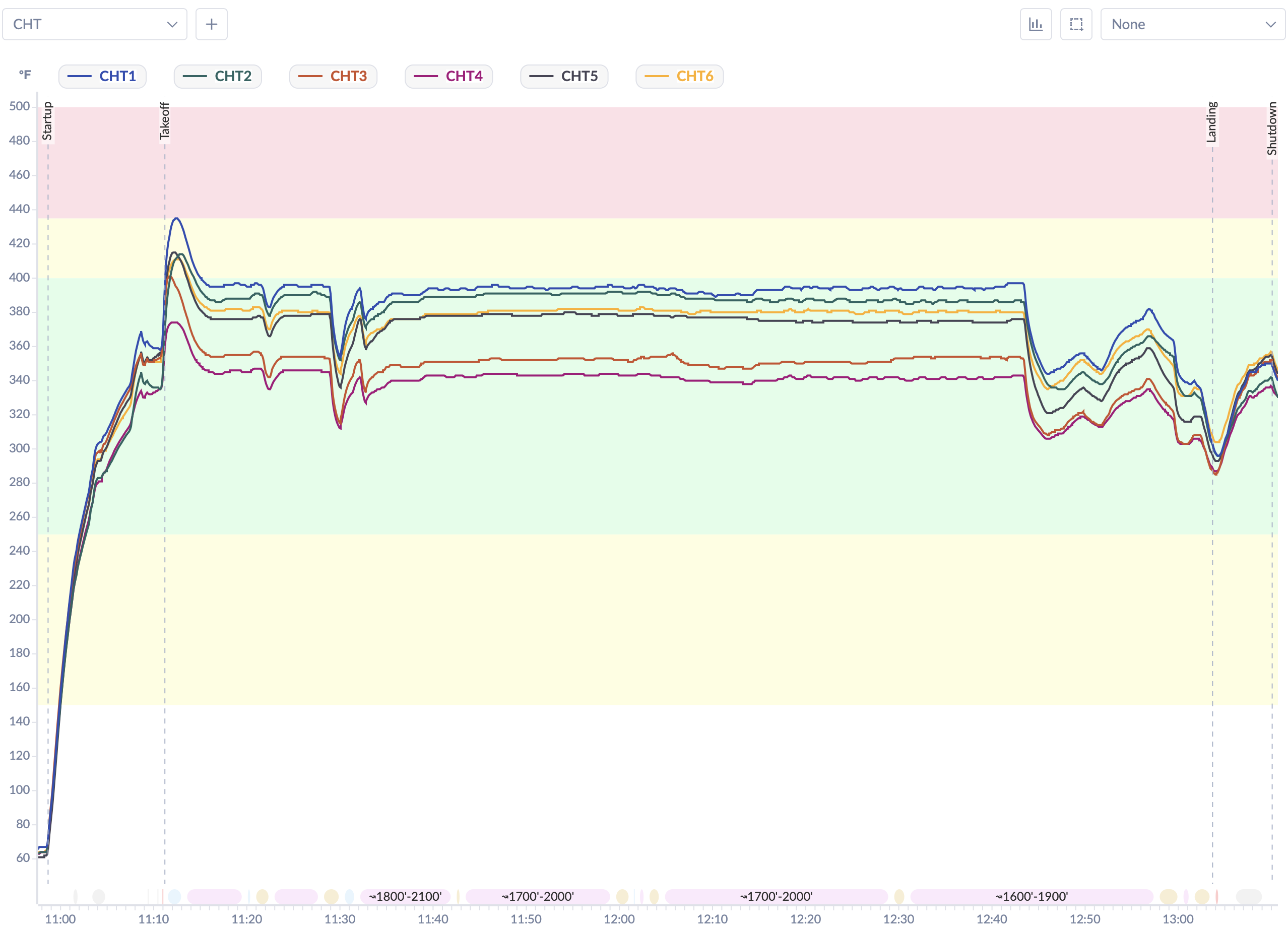
For those who’ve flown IO-540s through break-in — does this trajectory look about right to you? I’ve been running full rich at near-full power. Would love to hear if anyone has observations on what to expect from here.
Oil Temperature: Night and Day vs. Flight 2
This one made me happy. You’ll recall that the erratic oil temperature readings in Flight 2 were ultimately traced to a poorly crimped wire connection at the oil temperature probe — one that could literally be pulled free by hand once we unwrapped the wire bundle. We re-did the crimp, and the proof is right here in the data.
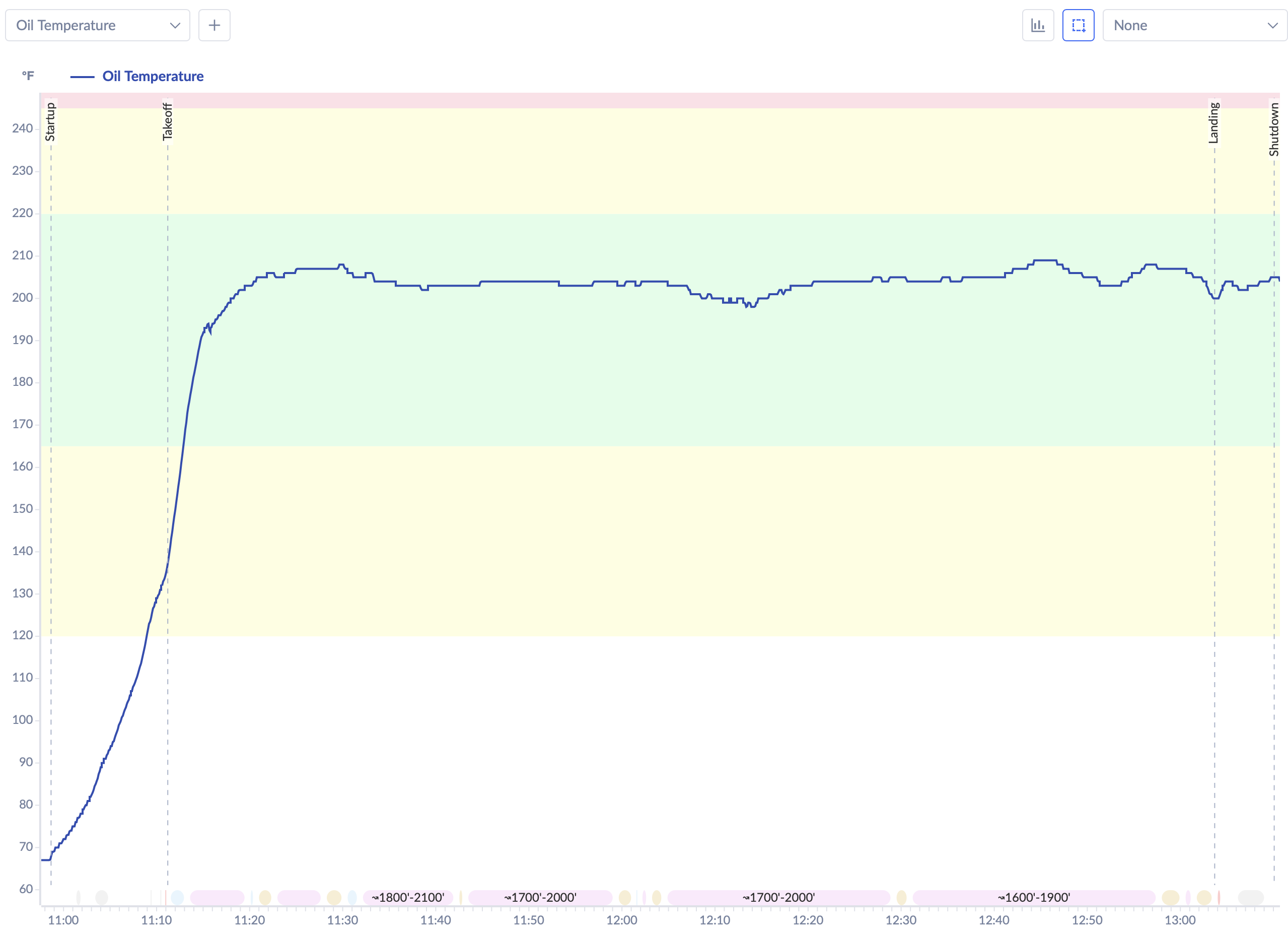
Oil temp settled in around 200–209°F for the duration of the flight and never wandered. Oil pressure ran 75–89 PSI throughout. After two flights with that anxious eye on the gauge, seeing a clean flat line in the green was genuinely satisfying.
One thing to note: At the end of Flight 4 (same day, evening flight), oil temp crept up to 215–220°F after a high-power takeoff and immediate landing. We also discovered the oil cooler airflow door wasn’t sitting at a full 90° open position — it had been slightly restricting flow during all previous flights. We’ve corrected that and will watch the temps closely next time. More on Flight 4 in a future post.
RPM and Power
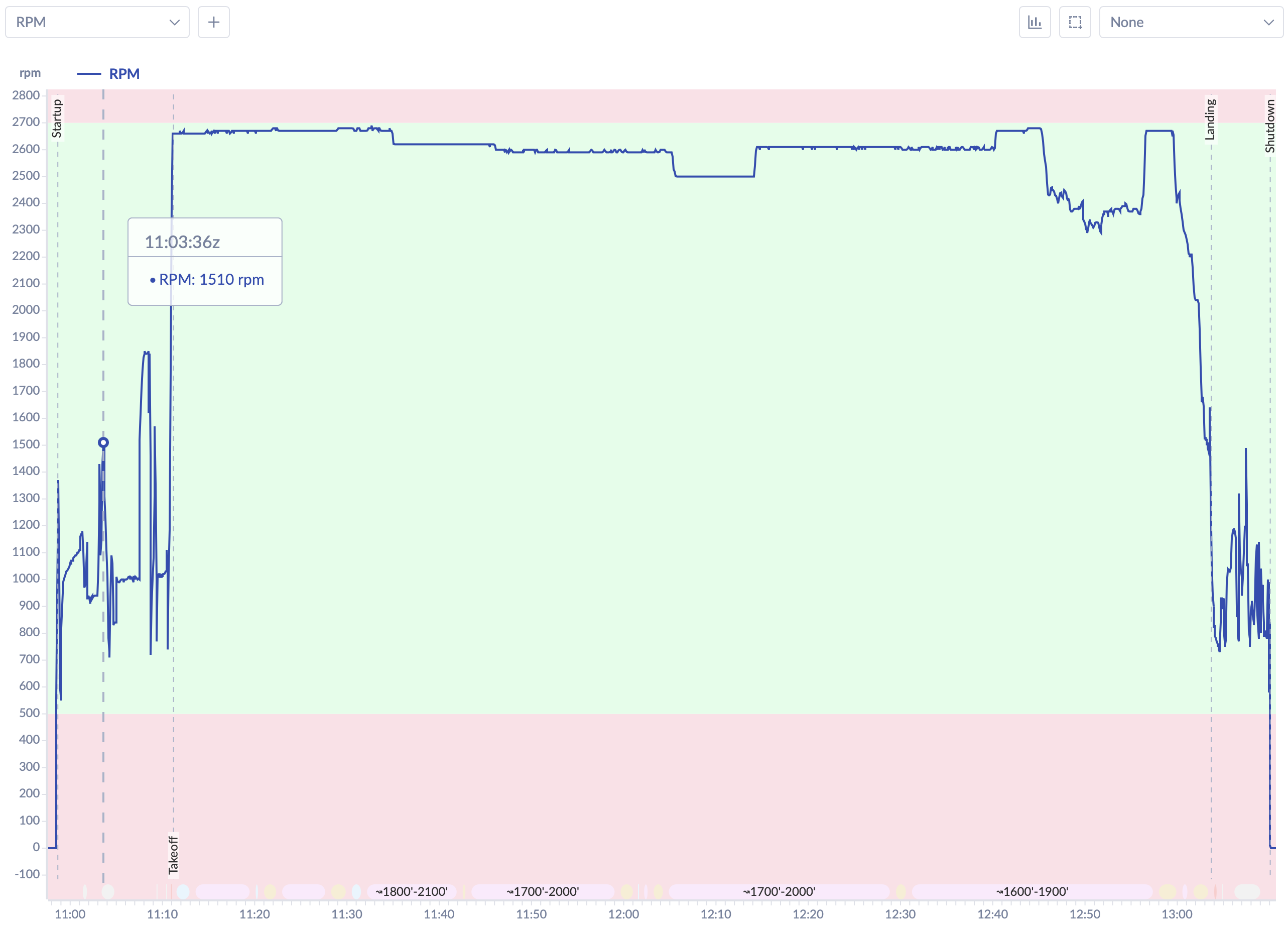
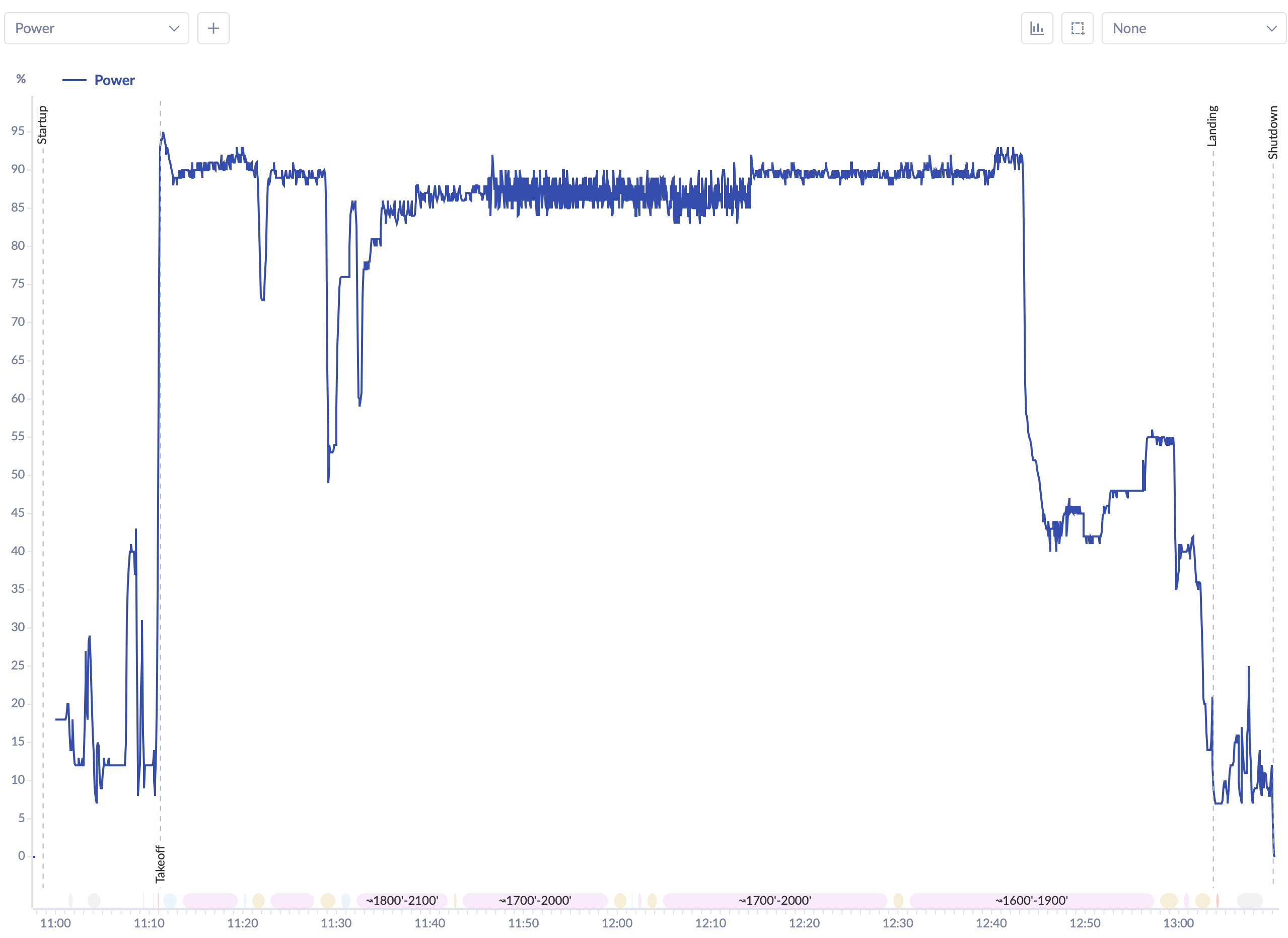
The RPM and power traces look about as clean as you could ask for. We held 2,600–2,690 RPM through most of cruise, operating in the 85–93% power range. There’s a noticeable step-down in the middle of the flight where I reduced power for a bit — I was experimenting with different power settings to see how the CHTs responded — before coming back up to near-full power for the remainder of the cruise portion.
The Highlight: First Flap Deployment
This was the part I’d been looking forward to. With two hours of relatively calm airspace and a stable aircraft, Flight 3 was the first time I had enough room to slow down and actually try the flaps — something I hadn’t been comfortable attempting in the tighter, lower patterns of the first two flights.
I stepped through the detents methodically: reflex to the first position (about 3° down from reflex), then to the 15° intermediate, then all the way to full flaps. Each step brought a noticeable pitch change and a mild need for roll trim, but the airplane handled it gracefully. The RV-10 felt remarkably steady through all the configurations — more planted than I expected, honestly.
The first full-flap landing came at the end of Flight 3. We were cleared in from 1,800 feet on a tight, close-in approach — I was running 85 knots, the descent angle was steep, and the CG was fairly far forward (with a couple of cinder blocks in the back seats to nudge it rearward, but still nose-heavy). As I’ve read about in the RV-10 community, the elevator authority at that configuration was noticeable — stick all the way back into my lap for the flare. The landing was fine, but it was an education. On Flight 4 that evening I used a shallower approach with a bit more power on, and that felt considerably better.
Fuel Floats: A Minor Mystery
Both fuel float gauges have been reading high throughout these flights — stuck at 25 gallons on the left and 24 gallons on the right even when the tanks actually hold 30 gallons each. My working theory is that the float arm is bent just slightly too close to one of the fuel tank ribs, causing it to hang up. A quick thump on the tank after landing from Flight 3 dropped the left gauge from its pegged “full” reading down to 11 gallons — right where it should have been given the fuel burned.
Has anyone tackled a stuck float in an RV-10 tank? I’d rather not pull a tank if there’s a less invasive approach. Any tricks for getting better clearance on the float arm without a full disassembly? Would love to hear how others have dealt with this.
Quick Summary of Flight 3
Overall, Flight 3 felt like a turning point. The crimp fix eliminated the oil temperature anxiety, the CHTs are trending cooler with each flight, we got the preferred practice area on the west side of the field, and I finally got to try the flaps. The airplane is performing well and the data is looking progressively more like what I hoped to see. There’s still plenty to sort out — the stuck fuel floats, the AHRS that tumbles on every takeoff roll, and the alternator issue that cut Flight 4 short — but the trajectory feels right.
Thanks as always to the Manassas tower team for being so accommodating. Flying experimental in Class Delta isn’t always easy to coordinate, and they’ve been genuinely helpful.
Your turn: If you’ve built or flown an RV-10 (or any IO-540-powered aircraft through early flight test), I’d genuinely love to hear your perspective in the comments. Whether it’s about CHT break-in, flap behavior, float arm fixes, or anything else that caught your eye in the data — all input welcome. Next up: a post on Flight 4 from that same evening — a shorter flight that ended with a loose alternator belt and more lessons learned.
Please join the discussion or send feedback here: VAF Thread — RV10 N997CZ Takes to the Skies

