Flight 2: N997CZ — Erratic Gauges, an Early Landing, and a Lesson in Crimp Connections

Flight 2 took place a week after the first flight, on April 17, 2026. If you haven’t read the first flight post, that’s probably the right place to start — it covers the aircraft, the context, and the CHT spike that set the stage for everything that followed.

This one was shorter, more stressful, and ended with a maintenance discovery that turned out to be both the cause of the problem and a straightforward fix. Here’s what happened.


The Setup

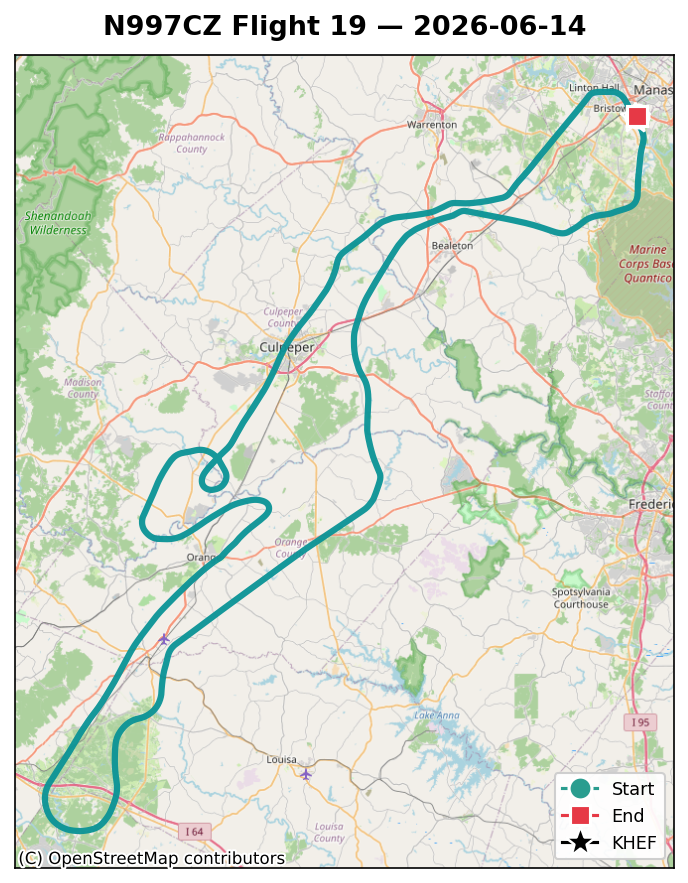
The original plan for Flight 2 was the same as Flight 1: west side of the field, 1,800 feet MSL, north-south legs in the practice area. But when I made the coordination call to Manassas tower that morning, the picture changed.

The controller asked me to keep my pattern on the east side of the field. On the east side, they could give me 1,400 feet MSL — 400 feet lower than Flight 1, and on the side of the field with less room to work in. For a second Phase 1 experimental flight, that wasn’t ideal. But it was what was available that day, so that’s what we did.

Full fuel on both sides — 30 gallons left, 30 gallons right.


The Flight

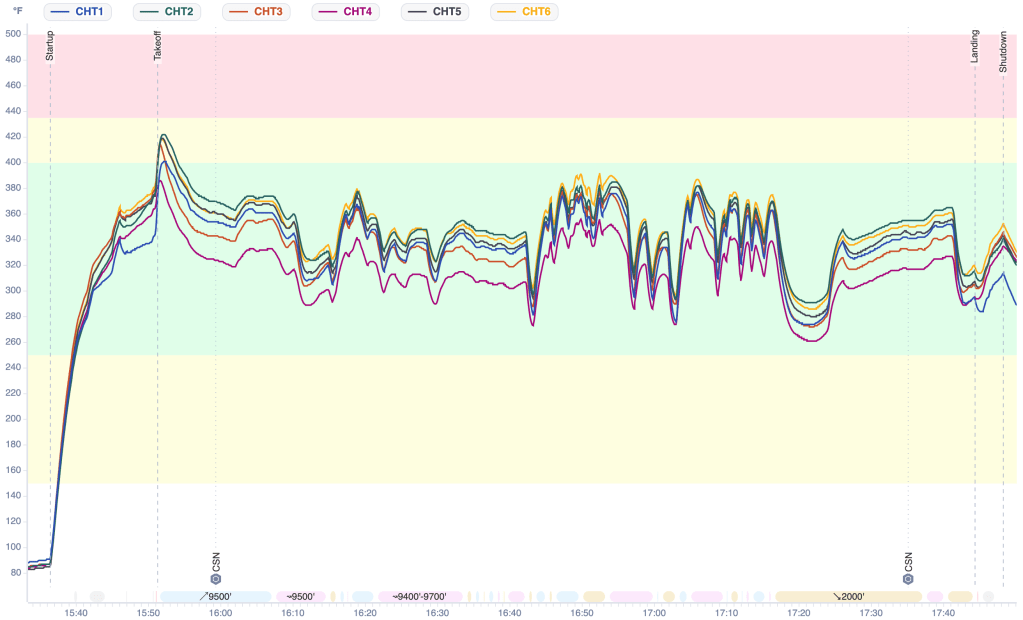
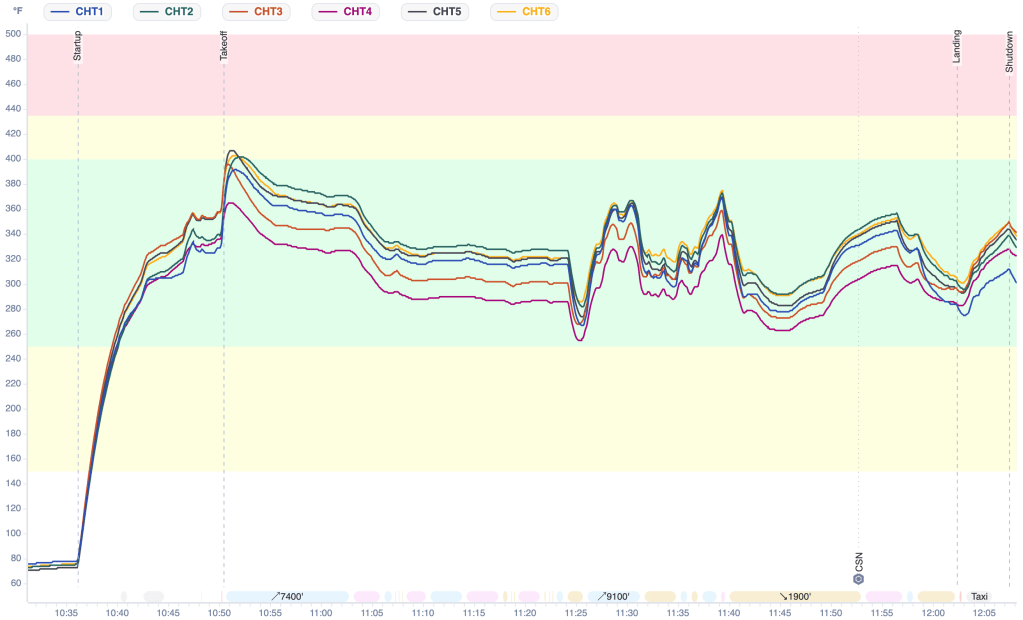
Takeoff was unremarkable except for two things that repeated from Flight 1: the AHRS-1 attitude indicator tumbled on the takeoff roll (same behavior as before — isolated to PFD1, PFD2 and the G5 standby both remained stable), and CHTs spiked above the warning limits during climb. This time all six cylinders went over 435°F, peaking somewhere in the 460–475°F range before settling down. Higher than Flight 1’s peak, which was unwelcome, and attributable to the later time of day and warmer ambient temperatures.
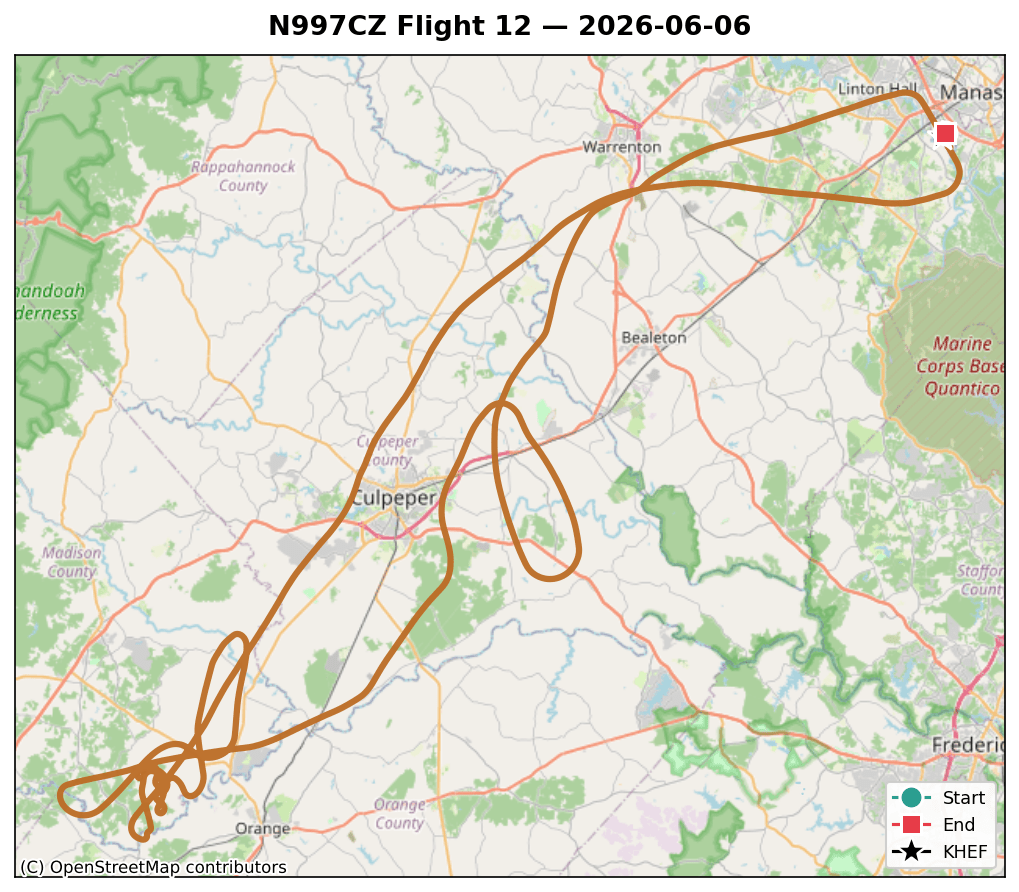
We were at 1,400 feet MSL with a compact pattern on the east side of the field. Not exactly the relaxed cruise conditions you’d want for watching CHTs settle, but the temperatures did come down as we moved out of the climb and into cruise power.

Then the Oil Temperature Started Misbehaving

Flight 1 had shown clean, stable oil temperature throughout. Flight 2 did not.

Partway through the flight, the oil temperature gauge spiked suddenly to an obviously unrealistic reading — well above what oil temperature can physically reach in a few seconds. I knew it wasn’t a real temperature (temperature can’t rise that fast), but an erratic gauge is still an erratic gauge. I noted it and kept flying.

It happened again. Then a third time — and this time the gauge didn’t just spike, it went dark. No reading at all for a minute or two.
Oil temperature gauge showing three erratic spikes and a dropout during Flight 2
The oil temperature trace from Flight 2. Three erratic spikes to off-scale high readings, followed by the gauge going completely dark. Oil pressure remained stable throughout — the problem was instrumentation, not the oil system itself.

Oil pressure was steady the entire time — 75–80 psi, never wavering. That was reassuring. A failed oil system shows up in the pressure first; the pressure was fine. But flying with no oil temperature indication, in a tight pattern at 1,400 feet, on a second experimental flight, with CHTs that had already been high — that was enough. I made the call to land early and figure it out on the ground.

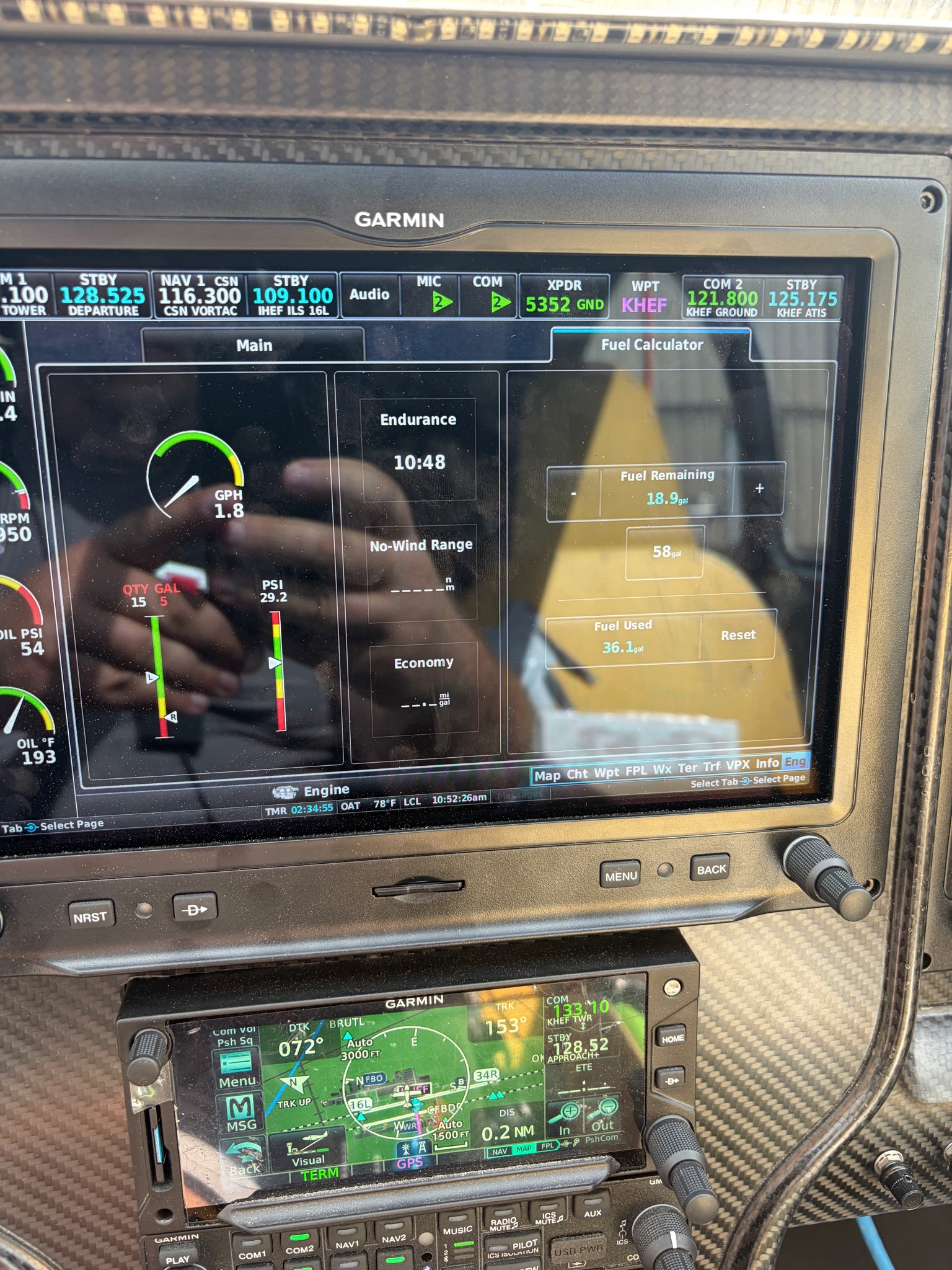
Total flight time: approximately 28 minutes. Fuel burned: 9.5 gallons from the left tank (confirmed by both the totalizer and the fuel truck, which put exactly 9.5 gallons back in).


The Diagnosis

Post-flight, we went looking for the cause. It didn’t take long.

In the firewall-forward wiring, near the oil temperature probe, we found a crimp connector that hadn’t grabbed the wire properly. When we unwrapped the bundle and pulled on the wire, it came free by hand — zero resistance. That was the culprit: an intermittent connection that would open under vibration, spike the reading to an implausible value, then reconnect. The third time it disconnected, it stayed disconnected long enough to drop the gauge entirely.

I’d actually noticed some finickiness with these wires before the first flight — wiggling the bundle in the hangar had produced erratic gauge readings on the ground. I wasn’t able to reproduce it consistently enough to isolate the cause before Flight 1, and it didn’t manifest during Flight 1. It clearly manifested during Flight 2.

The fix: re-do the crimp, properly this time. Wrap the bundle back up. Done.

Flight 3 would show whether the fix held.


What I Took Away

Flight 2 was short and more stressful than I’d planned. But the outcome was fine—nothing broke, I made a conservative decision to land when my instrumentation became unreliable, and we found and fixed the actual problem before the next flight. That’s the process working as it should.

A few things I’m carrying forward:

  • Known issues need abort criteria before departure. If something is behaving oddly on the ground, decide in advance what you’ll do if it shows up in the air. Don’t leave that decision for the moment.
  • Airspace coordination is worth doing ahead of time—and worth holding firm on. Getting assigned the east side at 1,400 feet added unnecessary pressure to an already-demanding flight. For subsequent flights, I’ve made a point to coordinate specifically for the west side of the field. Until I have full confidence in the aircraft and it’s ready to venture further outside the Class Delta for the remaining flight test program, having the more open, higher-altitude practice area on the west side is genuinely important—not just a preference. I’d encourage any experimental builder doing early Phase 1 testing at a busy Class D airport to have that conversation with the tower in advance, and be clear about what you need and why.
  • The fuel totalizer appears accurate. Having the refueled quantity match the totalizer reading exactly was a genuinely useful data point—I’m more confident in that system now.

As always, if you’ve been through something similar—erratic instrumentation on an early test flight, a wiring issue that surfaced at an inconvenient time, or a tricky judgment call about when to land—I’d really like to hear about it in the comments. I don’t have all the answers on this airplane yet, and the conversations here have been more useful than I expected.

Up next: Flight 3: N997CZ — Two Hours West of the Field, Flaps for the First Time →

Please join the discussion or send feedback here: VAF Thread — RV10 N997CZ Takes to the Skies

2021 Annual Condition Inspection

Hobbs: 824.1, Tach: 735.4

Annual Condition Inspection started 2/27/21.

Compression check: 79/78/7878

Removed all wheel pants. Need to replace the right wheel. Left wheel and nose wheel were tires and tubes were replaced last year.

Lubricated aileron hinges, aileron external pushrod rod end bearing, flap lower (external) linkages. Lubricated prop, mixture, throttle, cabin heat, and alternate air push/pull controls both inside the cabin and outside in the engine compartment.

Removed spinner. Greased prop with 6 pumps of grease each side. Inspected bolts and safety wire. Reinstalled spinner.

Removed all baggage items from aircraft. Vacuumed carpet, removed interior carpet. Determined both magnetos had been previously IRAN’ed at 398.7 (left) and 525 (right) Tach times respectively. Current tach 735.4.

Removed 8 spark plugs.

Inspected and took pictures internal to each cylinder of intake and exhaust valves. Replaced all spark plugs with new.

Current TODO List

Update checklist & laminate

Add toolkit to plane

Make a POH

Install upper cowl air ramps

Install co-pilot stick

Do best glide speed test

Do max speed test

Install spare fuses

Calibrate AoA Probe

Block some of the heater air inlet to slow the heater air and keep more pressure in upper cowl


Wire fuses or fuseible link for ammeter shunt

Install prop leading edge tape

Get repariman certificate

Repair passenger side canopy air seal weatherproofing

Install IFR GPS Databases

Block more of the oil cooler

Download flight 6 data

Tape over the holes in the belly that may let fumes in

Get G3X Lean assist mode working/enabled

Install nutplates for 2 extra screws for upper landing gear fairing

Prime the spinner to protect from UV

Mount 1.3 lb. halon fire extinguisher

Mount the PLB

Register the PLB

Check EFIS V-speeds

Add checklist to phone

Test GoPro ships power

Test GoPro aviation radio audio

Get Iphone mount

Install wire booties to protect magneto P-leads

Order & install aileron pushrod boots (to prevent cold air infiltration)

Install autopilot roll servo

Connect autopilot pitch servo actuator arm

Glue canopy fiberglass front lip split

Install dynon d6 compass

Buy tire air filler extension

Left front cylinder, 1 engine bolt weeping oil (1 drop per hour)

Organize flight logs/receipts

Caulk or firedip the firesleeve ends

Buy Hoppe #9 Gun Cleaning Solvent for cleaning the injectors

Buy ultrasonic cleaner

Fold safety wire & cut clamp tangs

Make gaskets for outside front dash access panels

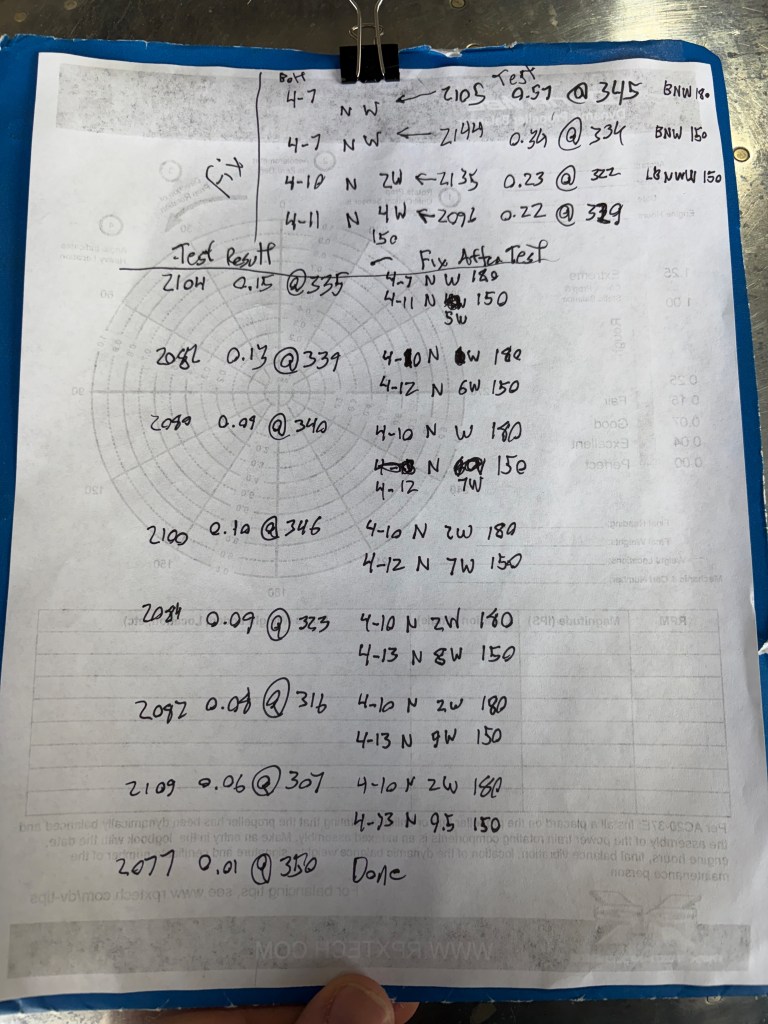
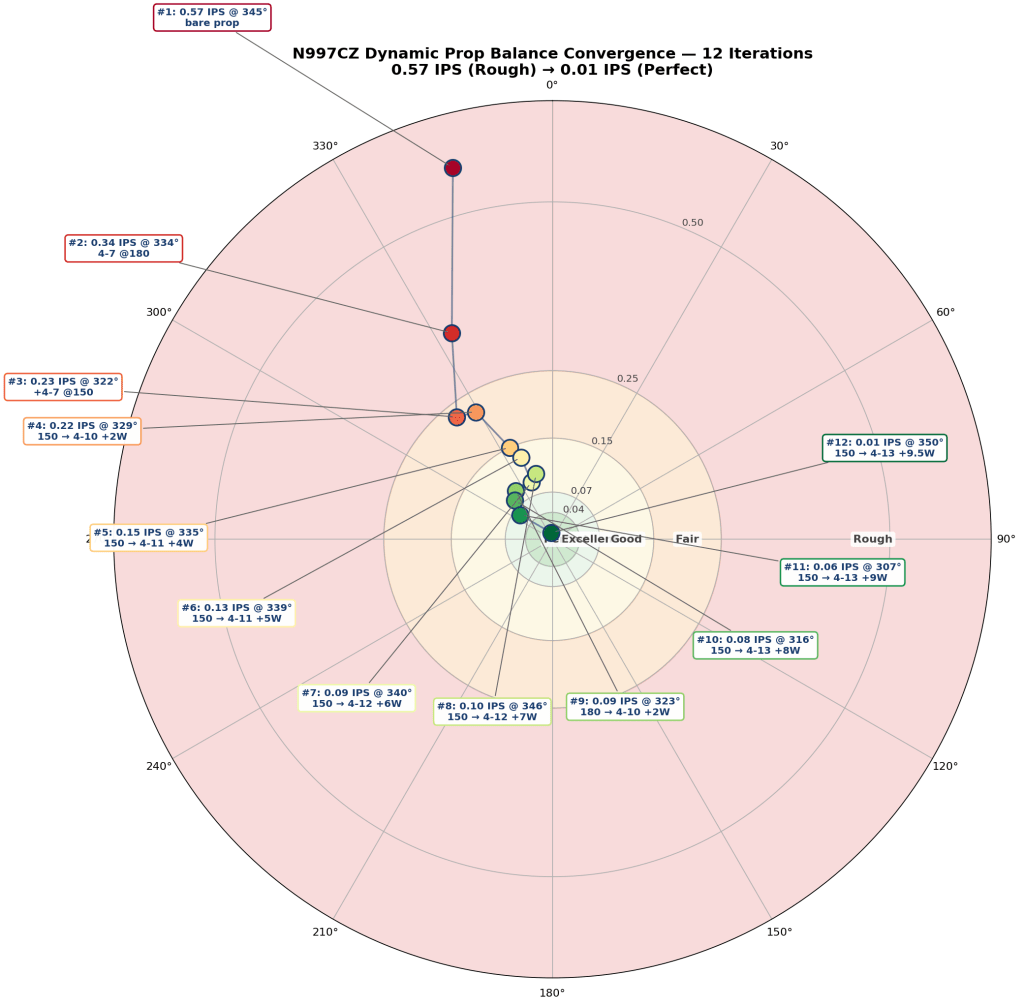
Get the EAA prop balancer and perform dynamic prop balance

Install main gear fairings

Positively retain the pins on main gear fairings

Seal lower antennas with caulk (Comm #2 & Transponder)

Order sandpaper

Order sanding blocks

Get aircraft polished

Record control surface deflections

Compute W&B for flights

Record serial numbers of all avionics

Record service bulletins on here

Document we swung the compass

Safety wire G3x harnesses

Document engine limits / color bands on here

Document fuel calibrations on here

Document fuel flow testing on here

Take screen shots of each EFIS screen and document on here

Get XM radio working

Trial Install GDL39

Link to or attach Bob’s first flight test info

Buy triple-A batteries

Buy power strip

Buy an instrument cover for behind the panel

Buy Cowl Plugs

Buy fuel tank drain plugs

Install forward floor carpet


Flight #22

6/2/16

Added 40 more pounds of water. This time to the baggage compartment. I’m walking the CG backwards a bit at a time from the 80.04 empty to the rear limit of 86.8. Takeoff for this flight was CG=84.3.

Basic Empty Weight LBS Arm Moment
Left Main

435

93.96

40872.6

Right Main

435

93.96

40872.6

Nose Wheel

296

39.11

11576.6

Empty

1166

93321.8

Empty CG

80.04

Max Limit LBS

1868.0

Max Limit Aero

1600.0

CG Limit Min

78.7

CG Limit Max

86.8

CG Limit Max Aero

84.5

Pilot Station

97.5

Passenger Station

97.5

Main Gear Station

94.0

Nose Gear Station

39.1

Fuel Station

80.0

W&B this flight @ takeoff:

Full Dummy 3
Empty Weight

1166

93321.8

Pilot

250

97.48

24370.0

Passenger

80 Water

97.48

7798.4

Fuel

252

80.00

20160.0

Baggage

40 Water

126.78

5071.2

Weight

1788

150721.4

CG

84.30

Left Main

736.5

Right Main

736.5

Nose Gear

315.0

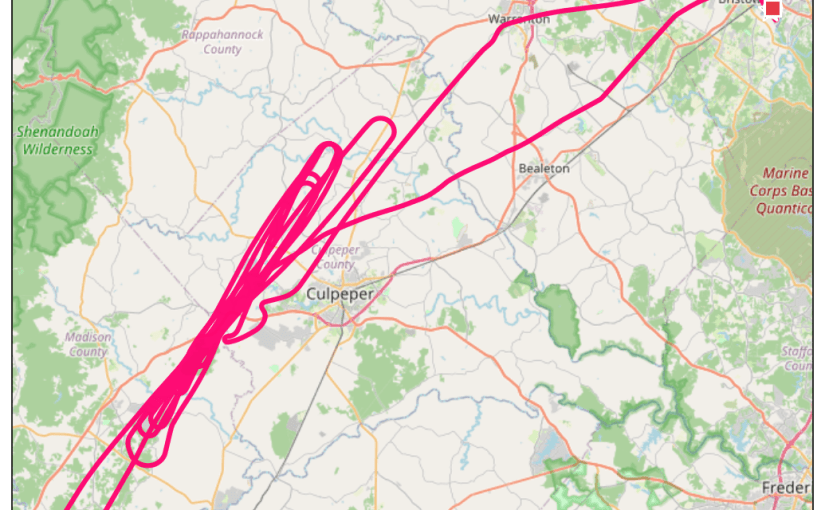
Due to a visual on heavy rain to the west, decided to takeoff and stay in the pattern for 30 minutes. After 30 minutes of doing 8 takeoffs and landings in the pattern, it appeared the rain wasn’t moving in or getting any worse so I picked up the flight plan and departed to the west. Wind was from the east and keeping the rain to the west from approaching. Experienced rain in the RV for the first time deliberately during this flight since I could dart into and out of the showers (this was light rain falling from clouds high above). No apparent leaks. Flew along the edge of a line of rain with clear to the east (Fredericksburg) and rain showers to the west (Madison/Greene). Darting to the North allowed me to get out over Rappahannock to the west and circle Mom’s house for a bit.

Upped the G’s to 2.83 G’s max during a few maneuvers.

Times: 33.4/36.1 Before; 36.3/39.1 After

Flight Data

Flight Map

Rain pictures from the flight:

W&B @ Landing:

Landing Dummy 3
Empty Weight

1166

93321.8

Pilot

250

97.48

24370.0

Passenger

80

97.48

7798.4

Fuel

73.8

80.00

5904.0

Baggage

40

126.78

5071.2

Weight

1609.8

136465.4

CG

84.77

Left Main

670.1

Right Main

670.1

Nose Gear

269.7

Flight #9 – Oil Pressure Gauge – Offscale high

On March 12, 2016, I went to the airport with the intention of doing 3 takeoffs and landings to warm the oil for the engine’s first oil change. Taxi out and runup went fine. Oil pressure in the 50’s during idle and in the 70’s during fast taxi. The first takeoff and landing went fine with oil pressure in the 70’s and 80’s. But during taxi back for the 2nd takeoff, the oil pressure sensor went off scale high very rapidly. I considered shutting down in the runup block, but all other parameters seemed normal so I thought it would be safe to taxi back to the hangar for diagnosis.

During the taxi back to the hangar, the gauge continued to read off scale high. At the hangar, I shut down the engine, and didn’t think to check the gauge before powering off the avionics. I then reapplied power to the avionics with the engine off and noted the gauge had returned to zero.

The Kavlico oil pressure gauge, is a 3-wire device with red, black, and green wires. The red wire is +5V supply from the avionics, the black wire is ground, and the green wire is sensor output. I learned from reading that 0.5 volts out is likely 0 PSI, and 4.5 volts out is likely 150 PSI. Downloading the data showed that when it went off scale high it was reading 154 PSI. This might be an indication the output wire was getting shorted to the +5V.

I disconnected the wiring to the sensor on the firewall forward side and checked all connections for security and/or damage.

0.5 Engine Time, 1.0 Total Time (11.6/13.5 Cumulative)

Wrapping the wings in vinyl

Now 3/4 done with the wings and learning how to wrap better. I bought a rubber roller from the crafts store and that helps to push down and get the adhesive to stick with less chance of scraping the surface.

I tried using a spray polymer wax after finishing the right wing and that seemed to add a nice finish.

Aircraft Polishing Equipment

I’m just getting started, so don’t take this as recommended. This is just what I was able to pick up locally when I suddenly got the bug to try some polishing:

Griots 6″ random orbit polishing buffer & red foam pad. Since I’m cheap, I put microfiber cloths over the foam pad and used that to help keep the red foam pad from getting filled with polish and super dirty. I washed the first 24 or so cloths that I used in the washing machine. Bob on VAF says I should try TCP mixed with water in a 5 gallon bucket to soak prior to washing. I’m itching to try that, but haven’t found the TCP yet.

IMG_0623

White diamond metal polish. I don’t know if I’m doing a bad thing here using this since it has a “sealant”.

IMG_0622-2

Zwipes microfiber 16″x24″ cloths. These are pretty thin and not very plush, but what I was able to have on hand to start with. Bob on VAF told me the ones on perfect polish are “a MILLION” times better. I’m going to try picking some of those up.

Screen Shot 2016-01-05 at 7.09.14 PM

On order from amazon to try out:Screen Shot 2016-01-05 at 7.12.51 PM

Screen Shot 2016-01-05 at 7.13.23 PMScreen Shot 2016-01-05 at 7.13.11 PM

Griot’s Garage 11115 Micro Fiber Polish Removal Cloth – Set of 3:

Screen Shot 2016-01-05 at 7.17.27 PM

(5-Pack) **SPECIAL SALE** THE RAG COMPANY 16″ x 16″ Eagle Edgeless Orange Professional Korean 70/30 Super Plush 480gsm Microfiber Detailing Towels:

Screen Shot 2016-01-05 at 7.18.46 PM

Here is a quick before and after surface condition shot. This is about 3 minutes of work by hand, using the zwipe cloths and the white diamond polish. I apply a small amount of liquid polish to the metal and rub with the microfiber till the paste turns black. Then wipe off with two successive passes with clean microfiber cloths:

IMG_0624

Not close to mirror finish and not all scratches gone, but pretty good for 3 minutes by hand. It also took off the sharpie which I couldn’t even do with MEK:

IMG_0632

IMG_0633

Other items on order that I want to try out:

(10-Pack) **SPECIAL SALE** THE RAG COMPANY 16″ x 16″ Professional Edgeless 365 GSM Premium 70/30 Blend Microfiber Polishing and Auto Detailing Towels (Royal Blue)

Screen Shot 2016-01-05 at 7.37.42 PM

3″ random orbit buffer:

Screen Shot 2016-01-05 at 7.39.03 PM

3″ Pads. These I probably won’t cover with microfiber:

Screen Shot 2016-01-05 at 7.37.28 PM

Screen Shot 2016-01-05 at 7.40.32 PM

Screen Shot 2016-01-05 at 7.41.05 PM

Aircraft Polishing

Well, I certainly don’t know what I am doing, but I decided to polish the plane for a bit prior to committing to paint. I started with the right wing top surface:

IMG_0596

Since I don’t have the good stuff yet (Nuvite), I just did a quick pass with stuff available at autozone. I bought a 6″ random orbit buffer, some foam pads, and used microfiber cloths under the foam pads to apply the cleaning polish. My first goal was just to git rid of the surface oxidation and remove the discolored lines left from the removal of the blue plastic along each side of each rivet line.

Although this still looks like crap, it is 100% better than before where it was milky/blotchy with obvious marks on each side of the rivet lines:IMG_0588

Getting better:IMG_0594

IMG_0589

You sure go through microfiber towels quickly. I took these home to wash and it took two cycles in the washing machine.

IMG_0590

IMG_0591

Today (1/3/16), I did the left wing, with help from Rachel and Zack:

IMG_0604