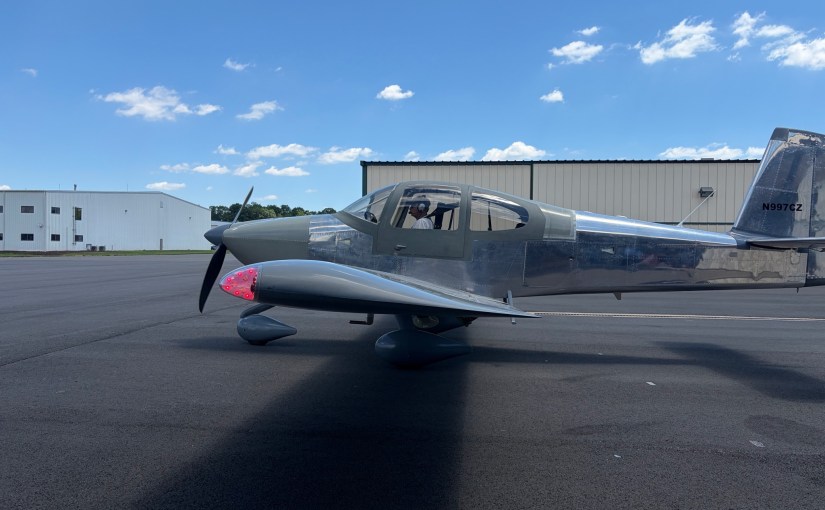
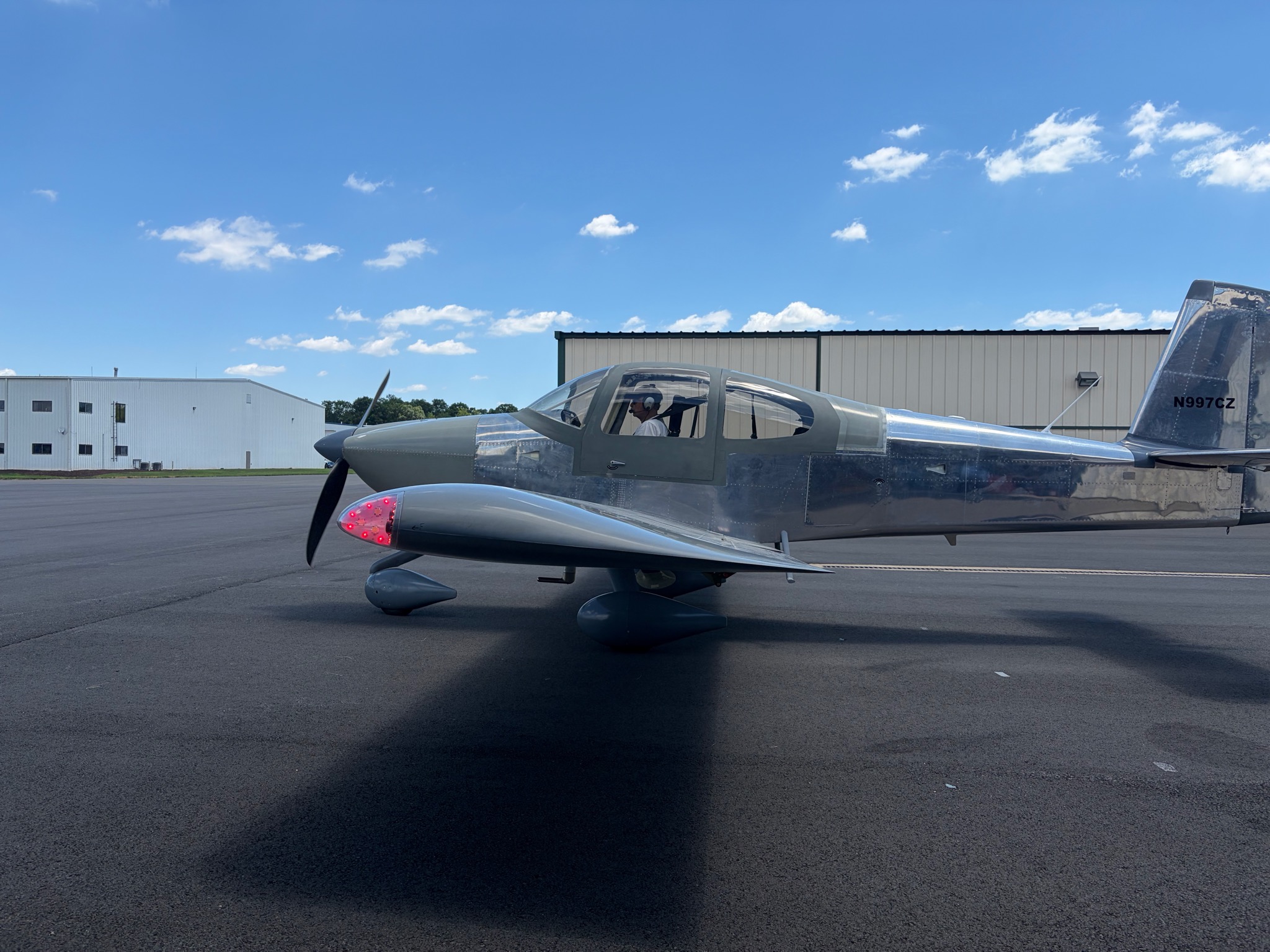
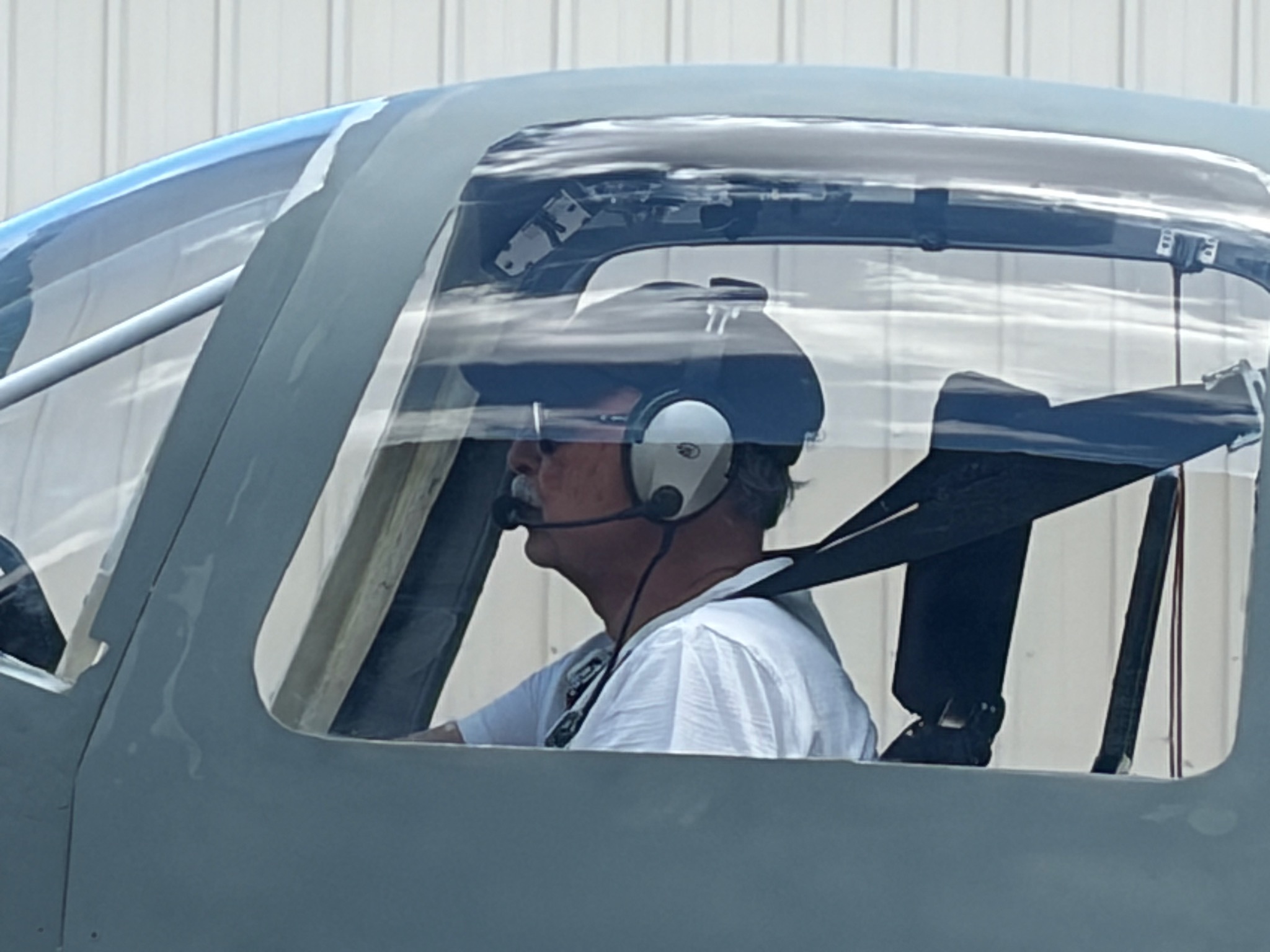
Three owners, three pilots — and as of this afternoon, all three have now flown the airplane. Flight 14 was Dan’s first flight; Flight 17 was Harry’s. Harry is no stranger to the family — he’s a partner in our RV-7 too, and a seasoned RV hand — but this was his first time at the controls of the RV-10. I flew the morning’s cruise-and-leaning card solo (Flight 16); in the afternoon I handed N997CZ over, stood out on the ramp with the camera, and watched the third member of the partnership take our airplane up.
The Numbers
| Date | 2026-06-13 (afternoon) |
| Engine time | ~1.3 hr |
| Engine hours | 23.9 → 25.2 |
| Max altitude | ~4,545 ft MSL (4,795 ft GPS) |
| Fuel used | 14.9 gal (totalizer) |
| Profile | familiarization — no test cards |
| Conditions | warm afternoon (cruise OAT +63 °F) |
No test-card link this time — like Dan’s flight, this was a familiarization sortie, flown rich and relaxed. The cards stayed in the binder.
From the Ramp
Harry took his time with it — a long, unhurried run-up and taxi before rolling, a good 24 minutes of ground time before brake release. That’s exactly how a first flight in a new-to-you airplane should go, and no surprise from someone who already knows his way around an RV.
The Flight
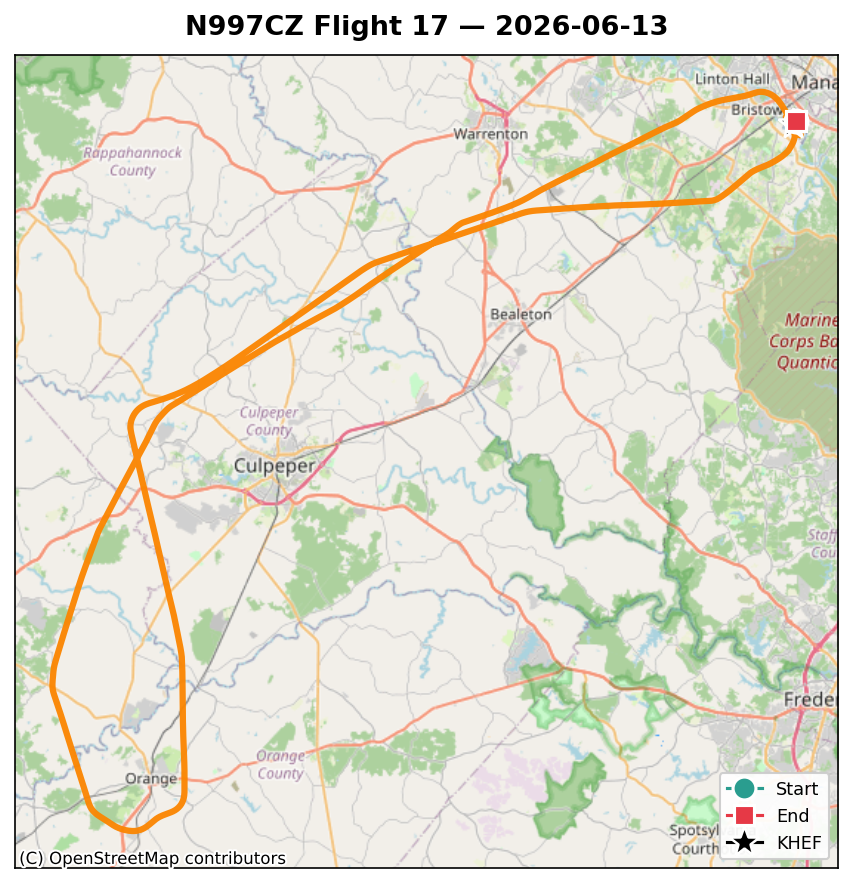
A proper get-comfortable hop: a cruise out to the southwest toward the Culpeper/Orange practice area and back, mostly down low (max ~4,500 ft MSL) and quick — about 167 knots true in cruise, full rich, no leaning. Nothing aggressive: no stalls, no steep stuff beyond gentle 30°-bank turns. Just stick time, getting the feel of the airplane’s weight, trim, and sight picture.
The ground track is a clean out-and-back — none of the test-pattern geometry of a card flight, just a flight with somewhere to go and back.
A couple of systems notes from the ride. Cabin CO peaked at a benign 6 ppm during the low cruise — worth a mention because it confirms the detector was reading normally, which retroactively makes the flat zero on the morning’s Flight 16 the genuine oddity to keep watching. CHTs ran warm-but-fine on the rich, low-altitude profile (hottest cylinder 430 °F), and the attitude system stayed rock-steady the whole flight — fitting, since this airplane’s long-running attitude saga had finally closed out that same day, with all three sources verified healthy.
Bottom Line
The whole partnership is now checked out in N997CZ. Harry has the airplane in his logbook, it behaved exactly as it should, and Phase 1 rolls on.
— Jim

