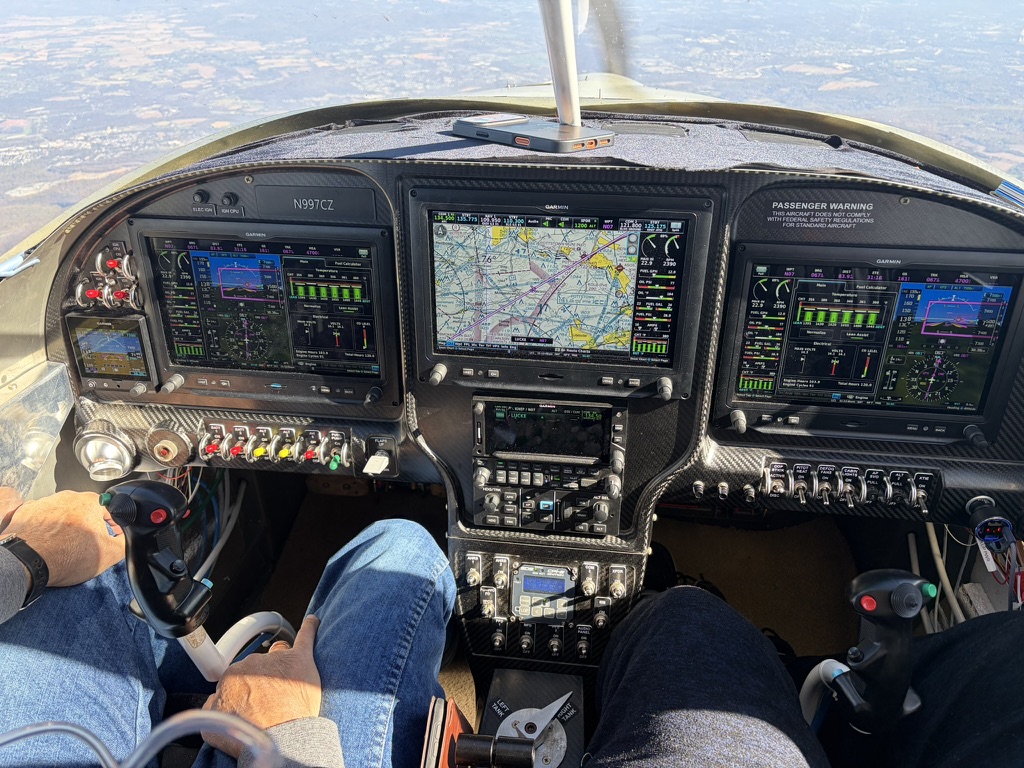
The last post here was Flight 19, back in June. I was chasing a sluggish roll autopilot, working through Phase 1, and learning how much there still was to learn about an airplane that was already flying.
Then the writing stopped.
The flying—and the testing, troubleshooting, ballast hauling, and occasional fiberglass repair—kept going. The flight records now run through Flight 87, with another November outing still to reconcile. We finished Phase 1, started carrying passengers, and took the family somewhere beyond the local practice area.
On November 7, Gianmarco left a comment asking whether there was an update. Fair question. There are quite a few.
First, the unfinished autopilot business
Flight 19 ended with a diagnosis: I had been adding roll-servo torque when what the autopilot needed was more gain.
On Flight 22, I increased the roll gain from 0.6 to 0.75. Later testing went considerably beyond heading-bug turns: navigation intercepts from both sides of course, minimum-speed protection, disconnects, servo overpower checks, and a coupled approach and go-around.
That deserves its own follow-up. Changing a setting is one part of the job; demonstrating what the system actually does is the rest.
What happens when you pull the power?
The next block after Flight 19 was glide testing.
Flights 20 and 22 covered the propeller pulled back; Dan flew the propeller-forward comparison on Flight 23. Same basic question, different amount of drag hanging on the front of the airplane.
The propeller position made a measurable difference. So did the atmosphere. Some of the early results had enough thermal contamination to make an apparently precise “best glide” number less convincing than it looked on the chart.
That became a recurring theme: collecting numbers is easy. Figuring out which numbers answer the question takes more work.
The airplane became a water-jug delivery service
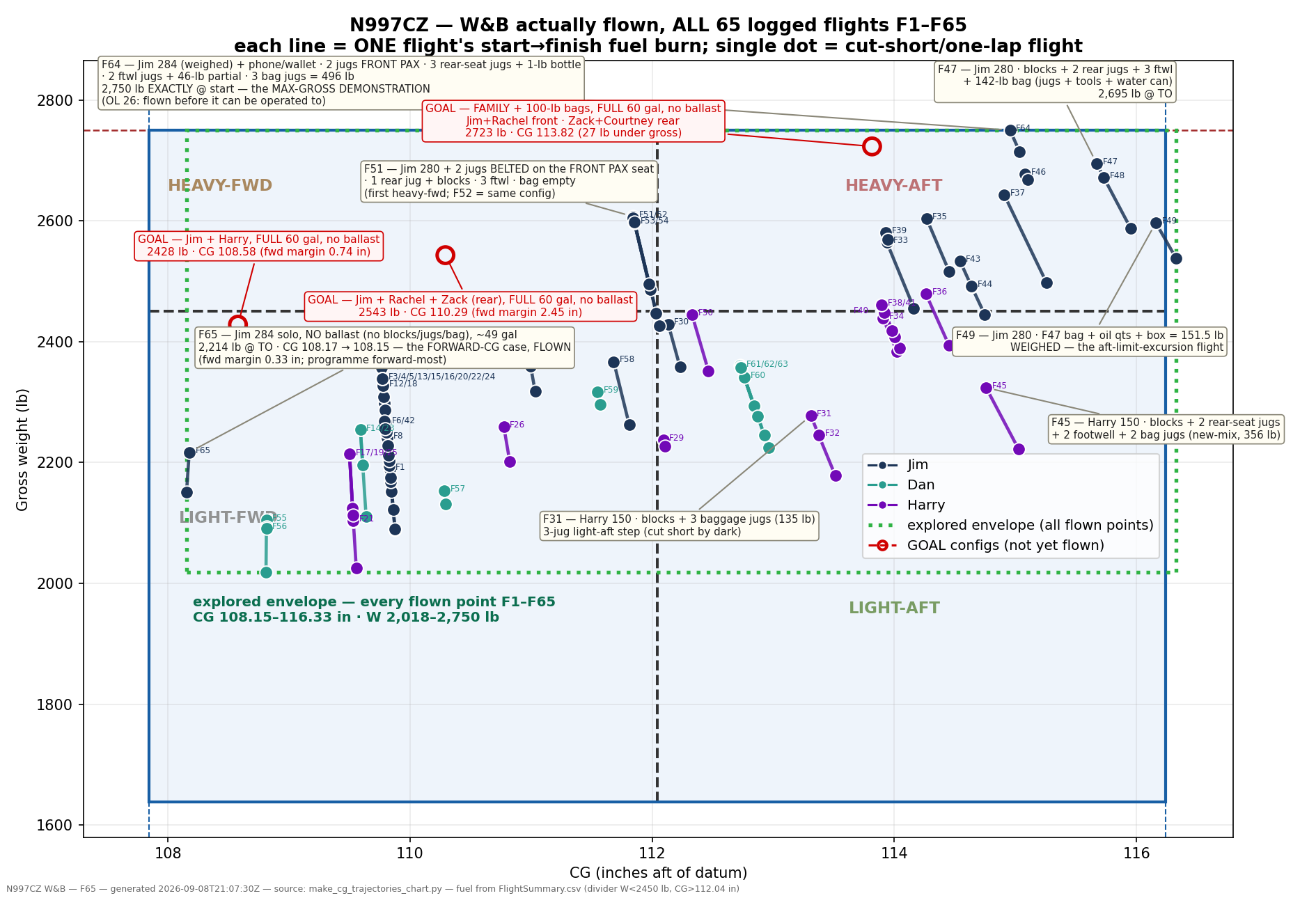
Much of the summer was devoted to expanding the tested weight-and-CG envelope.
That meant water jugs—count ’em, that’s 11 five-gallon water jugs—cinder blocks, tiedowns, loading calculations, and repeated flights with the ballast moved around. Light and forward. Light and aft. Heavy and forward. Heavy and aft. Then account for where the CG moves as the fuel burns.
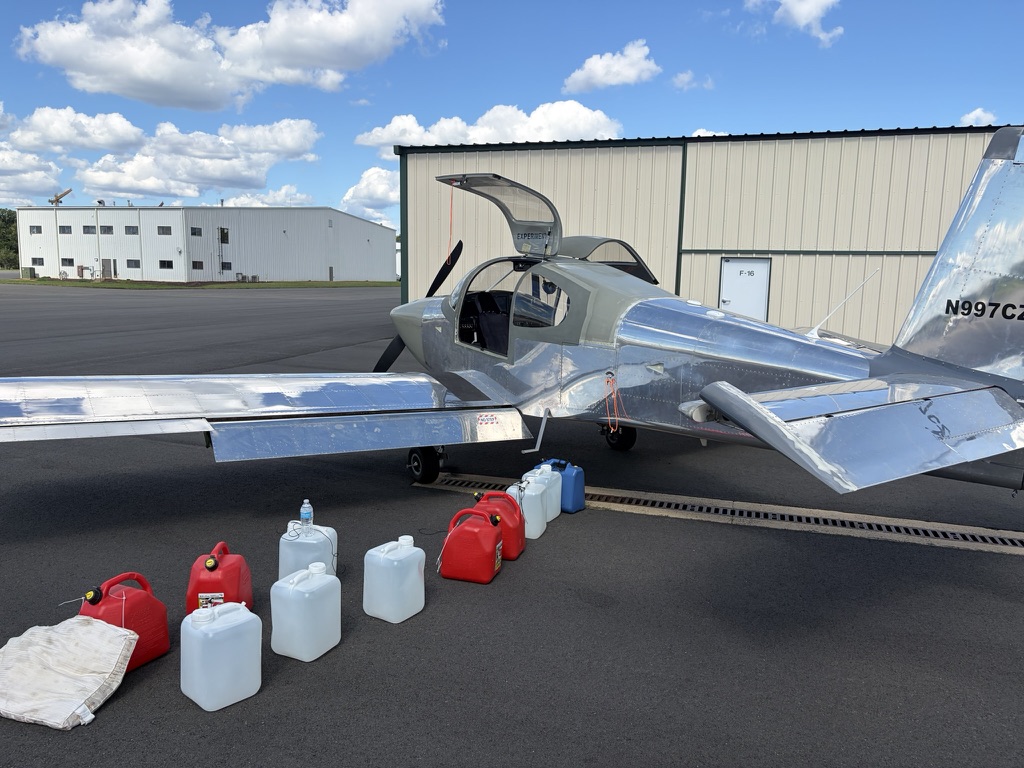
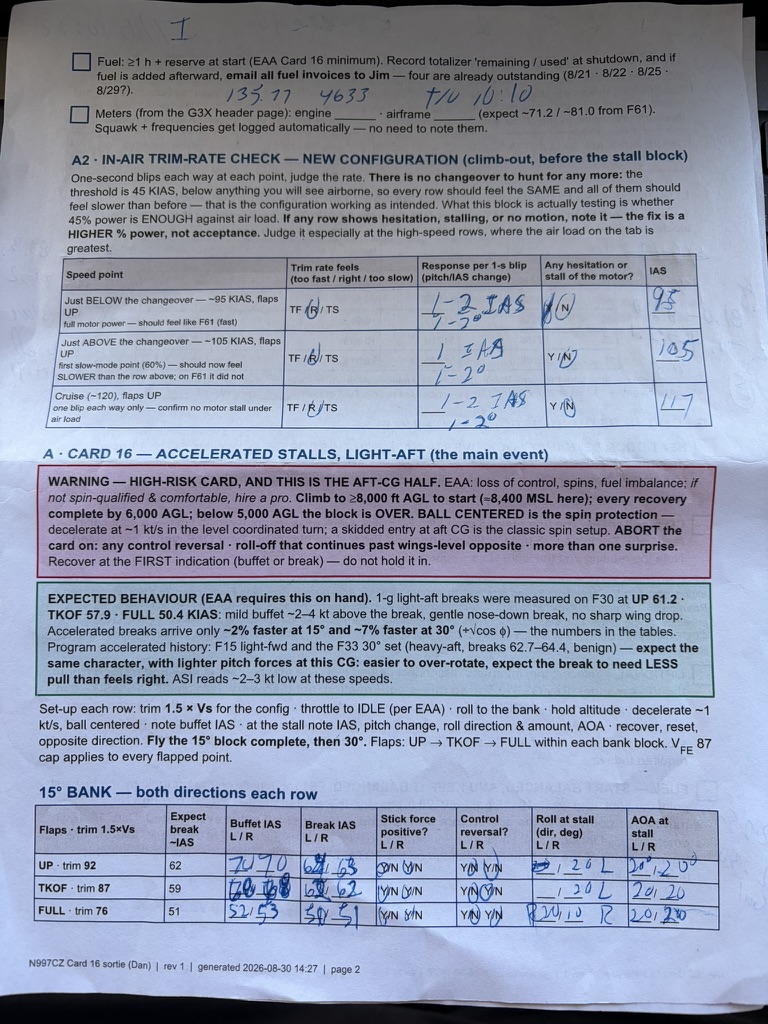
We flew stall series at different flap settings and loadings, checked trim authority, explored stability, and worked through the remaining test cards.
There were useful lessons in the bookkeeping, too. Carefully weighing the actual ballast later exposed differences from the nominal weights used in planning—including a small inadvertent aft-limit excursion. A jug’s assumed weight and its measured weight are not necessarily the same thing.
There were interruptions
Not every flight advanced the test matrix.
The intermittent oil-temperature indication returned. A check flight could look perfectly normal, then another flight would produce an alarming trace. Harry removed the suspect crimps and soldered the probe-wire connections; the subsequent logs stayed clean.
The bigger interruption was July’s right-brake fire after landing.
That led to a teardown, replacement parts, brake bleeding, and an investigation that eventually found a rotated rudder-pedal extension preventing the right master cylinder from returning fully. A small mechanical interference had a much larger consequence; we were lucky to save the plane with damage constrained to the wheel pant and brake.
There is enough in that sequence for a separate post, including what the taxi data showed before anyone saw the fire.
By August 2, the airplane was back in the air for its post-repair shakedown, and testing resumed.
September 6: finishing the flight-test campaign
September 6 was a busy day.
Dan completed the remaining light-aft turning-stall matrix on Flight 63. I then flew Flight 64 at the declared 2,750-pound loading.
After that, all eleven ballast jugs came out.
Flight 65 demonstrated the forward-CG configuration with me aboard and no ballast—the solo loading we had been working toward.
Those last two flights put a useful pair of endpoints on the campaign: the heavy airplane, then the airplane without all the test cargo.
Phase 1 finished at Flight 65.
Finally, passengers
Flight 66, on September 24, was the first Phase 2 flight and the first flight with a passenger aboard. Harry came along, and we went to Culpeper for landing practice and fuel.
In October, the four of us took N997CZ to Dare County, KMQI, and back.
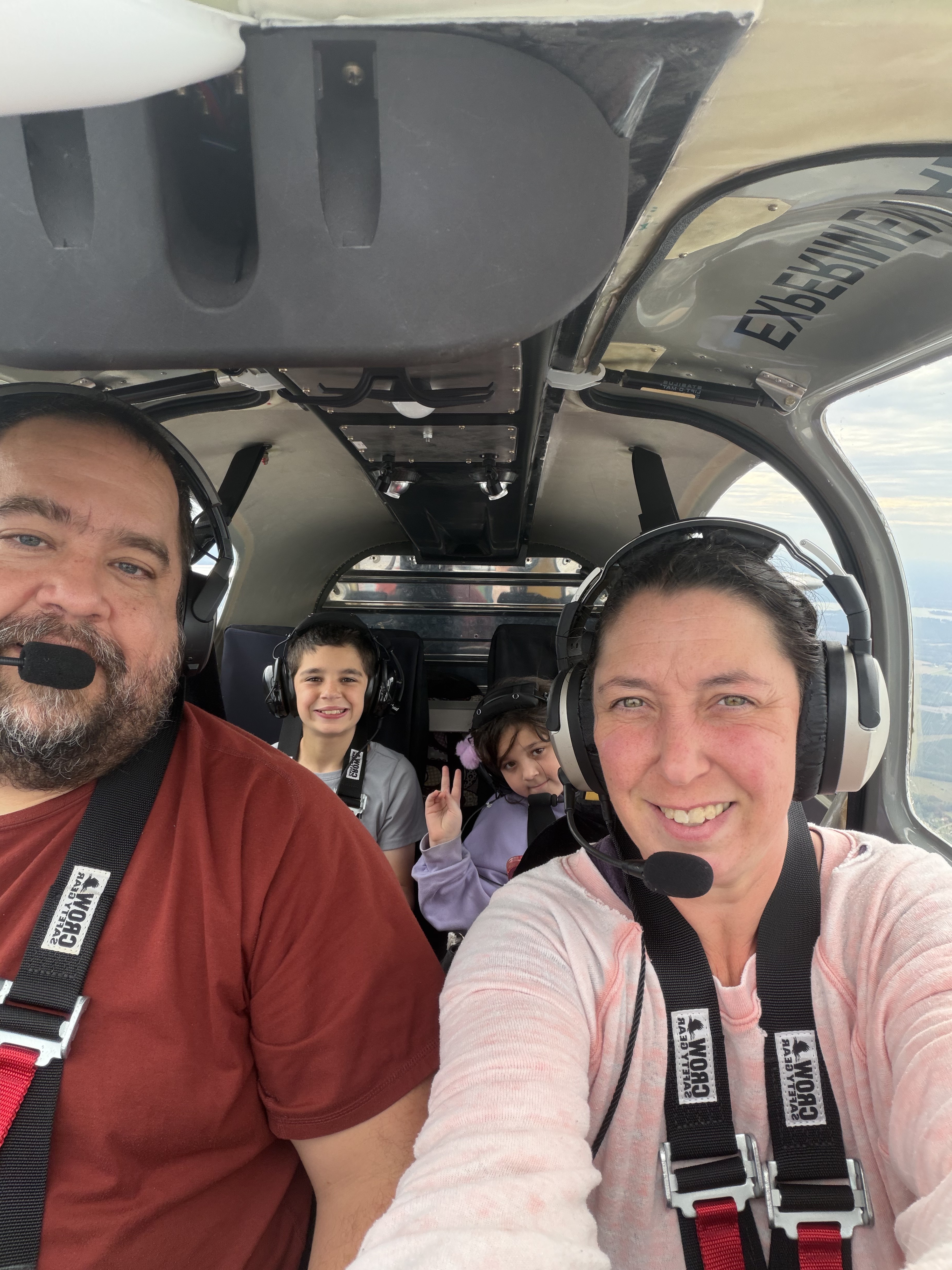
After months of flying test points with water jugs occupying the passenger space, carrying the family on an actual trip was a different kind of milestone.
There was still plenty of local practice. There were also more maintenance lessons, an alternator-belt problem, and a rough landing at N07 that meant another round of wheel-pant fiberglass work. On the next N07 visit, two go-arounds preceded the landing.
Phase 2 has supplied its own material.
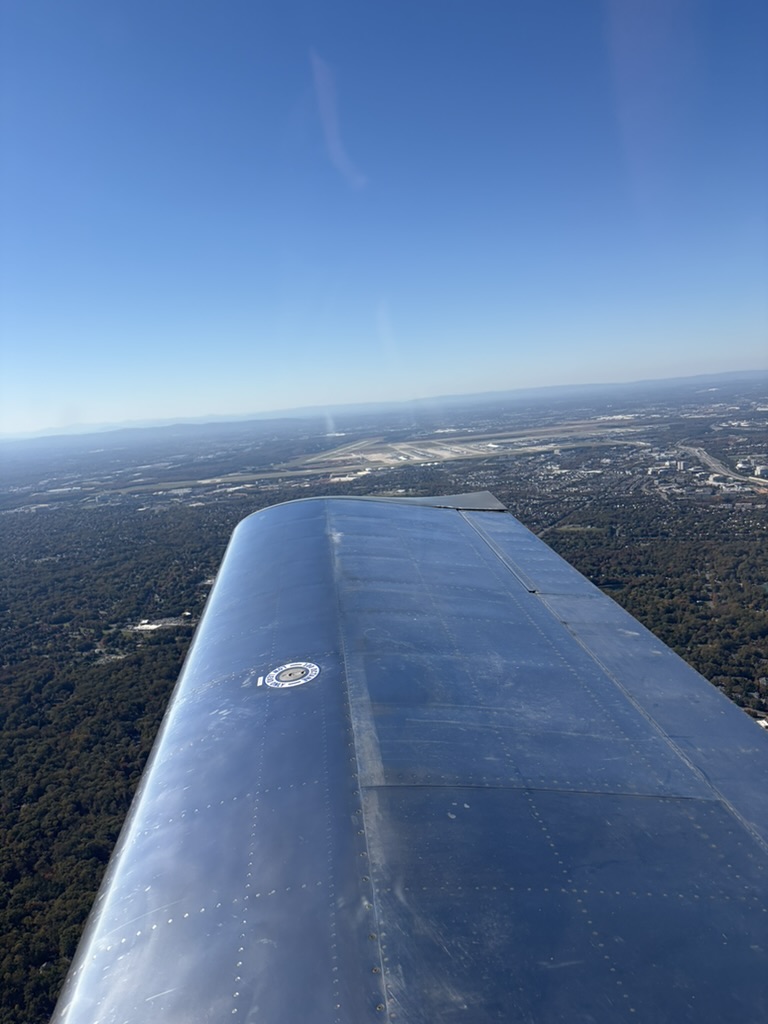
And now, back to writing
November brought an IFR outing to Charlottesville and back, another oil change, and a return to the flight-test data for a different project: using the measurements to help build an RV-10 simulation.
The records have grown considerably since Flight 19. So has the list of things worth writing about.
I’ll pick up the detailed stories in the next posts. For now: N997CZ finished Phase 1, the passengers have replaced the ballast, and the blog has some catching up to do.
Thanks for the nudge, Gianmarco.
— Jim

